Best Plant Growth Regulators and Fertilizers for Healthy Lawns 2025
Maintaining a lush, green lawn requires proper nutrient management and growth regulation. Using the best plant growth regulators (PGRs) for lawns can reduce mowing frequency, improve turf density, and enhance stress tolerance. Alongside fertilizers, these products ensure your lawn remains vibrant throughout the seasons. Below is a summary table of top recommended PGR and fertilizer products available on Amazon, highlighting features suited for various lawn care needs.
| Product Name | Brand | Key Feature | Coverage Area |
|---|---|---|---|
| The Andersons Professional PGF Complete 16-4-8 Fertilizer | The Andersons | Phosphorus-free, slow-release nitrogen with humic acid | 5,000 sq ft |
| Atticus Pramaxis MEC Plant Growth Regulator (8 oz) | Atticus | Contains 11.3% trinexapac-ethyl; reduces mowing frequency | Variable |
| Quali-Pro T-Nex Plant Growth Regulator (Primo Maxx) 128oz | Quali-Pro | Improves color and stress tolerance of turfgrass | Large coverage |
| The Andersons Governor G Granular Lawn Growth Regulator | The Andersons | Reduces growth by up to 50%, promotes root growth | 20,000 sq ft |
| Atticus Pramaxis MEC Plant Growth Regulator (1 Gal) | Atticus | High-concentration trinexapac-ethyl for turf growth control | Variable |
The Andersons Professional PGF Complete 16-4-8 Fertilizer with 7% Humic DG

This phosphorus-free fertilizer features a specialized blend including 7% humic acid to enhance turf quality and nutrient uptake. Its MUtech coated slow-release nitrogen ensures uniform growth and extended feeding, while DG particles rely on nutrient release without a physical coating, reducing the risk of premature release caused by mowing equipment. This product is suitable for lawns up to 5,000 square feet and promotes stronger, healthier turf with balanced nutrients.
Atticus Pramaxis MEC Plant Growth Regulator (8 oz)

Pramaxis MEC contains 11.3% trinexapac-ethyl, the same active ingredient trusted by professionals for over 30 years. It enhances root and rhizome growth to increase turfgrass stress tolerance against drought, heat, and disease. By slowing vertical growth, it reduces mowing frequency and clippings, which eases lawn maintenance. This PGR is compatible with both cool- and warm-season grasses, ideal for a wide range of turf areas including lawns and athletic fields.
Quali-Pro T-Nex Plant Growth Regulator (Primo Maxx) 128oz
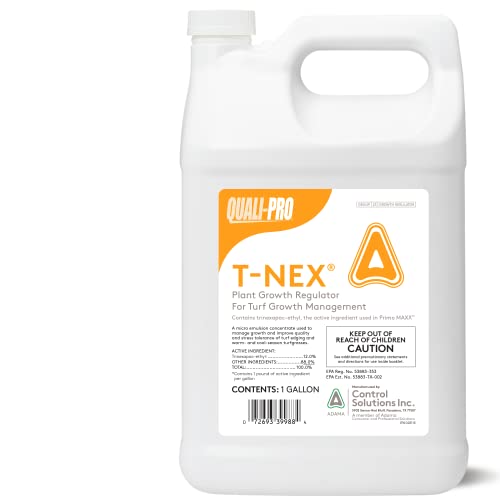
This PGR manages turfgrass growth and enhances quality and stress tolerance in both warm- and cool-season grasses. It improves rich color, encourages lateral stem and root development, and helps produce healthy, durable blades critical for maintaining resilient turf. The large 128oz quantity is suitable for golf courses and expansive lawn areas requiring professional-level growth control and quality enhancement.
The Andersons Governor G Granular Lawn Growth Regulator

This granular growth regulator reduces grass height by up to 50% within just five days, significantly reducing the need for frequent mowing. It redirects growth energy to roots, promoting lateral spread and enhancing lawn density, health, and color. Covering up to 20,000 square feet, it is ideal for homeowners and groundskeepers seeking less maintenance without sacrificing lawn appearance.
Atticus Pramaxis MEC Plant Growth Regulator (1 Gal)

The concentrated 1-gallon Pramaxis MEC formulation contains 11.3% trinexapac-ethyl, providing professional-grade turf growth management. Growing below-ground root and rhizome mass improves turf resilience against environmental stressors. It slows vertical growth to reduce mowing labor and is labeled for most managed turf including lawns, golf courses, and athletic fields. This volume suits larger lawns or frequent applications.
Buying Guide: Choosing the Best PGR and Fertilizer for Your Lawn
When selecting a plant growth regulator or fertilizer for your lawn, consider these key factors to optimize turf health and maintenance:
1. Type of Turfgrass
Determine whether your lawn consists of cool-season or warm-season grasses. Some PGRs and fertilizers are formulated specifically for one type, while others are labeled for both. Accurate identification ensures product compatibility and performance.
2. Desired Growth Regulation
Consider how much vertical growth reduction you want. Products like The Andersons Governor G can reduce growth by up to 50%, significantly lowering mowing frequency. Liquid PGRs such as Pramaxis and T-Nex offer more precise adjustments in growth rate and turf quality.
3. Nutrient Content and Release Type
Fertilizers vary in nutrient ratios (N-P-K) and release mechanisms. Slow-release nitrogen, as featured in The Andersons PGF Complete, provides gradual feeding, reducing nutrient leaching and promoting steady turf growth. Check for micronutrients or humic acid additives that support soil health and turf vitality.
4. Coverage Area and Application Frequency
Choose a product volume and format based on your lawn size. Granular products are easier to spread over large areas, while liquids provide uniform coverage but may require more frequent applications. Review label instructions for proper timing to maximize effectiveness.
5. Stress Tolerance and Environmental Conditions
Opt for PGRs that enhance drought, heat, and disease resistance if your lawn faces challenging weather or pests. Products with trinexapac-ethyl improve below-ground root growth, boosting resilience under stress.
6. Ease of Use and Maintenance Goals
Consider labor reduction benefits. Growth regulators can lighten the mowing load by reducing clipping volume and delaying the need for mowing. Granular products may require less frequent treatment but ensure proper watering for activation, while liquid applications can be integrated into existing spray routines.