Best Organic Fertilizers for Flowers That Promote Abundant Blooms
Choosing the right organic fertilizer can boost flowering performance, improve soil health, and reduce environmental impact. This guide highlights five top student-tested options that cater to a variety of flowering plants—from annuals to perennials and ornamental containers. Each product is evaluated for blend quality, release method, and suitability for different garden setups. Use this overview to match a plant-friendly fertilizer to your blooms and growing conditions.
Summary of selected products:
- Espoma Organic Flower-Tone 3-4-5 (4 lb) – Ready-to-use, slow-release, ideal for roses, annuals, perennials, and hanging baskets.
- Burpee Natural Purpose Granular 4-Lb Organic Food – OMRI-listed, multi-use for vegetables, flowers, and herbs; long-lasting feeding.
- Jobe’s Organics Granular Fertilizer (4 lb) – 3-5-4 NPK with organic base, designed to minimize runoff and odors.
- True Organic All Purpose Plant Food (4 lb) – Balanced, includes seabird guano and fish bone meal for a broad nutrient mix.
- Dr. Earth Flower Girl Organic Bud & Bloom Booster (4 lb) – Natural blend tailored to flowering plants and vines.
Espoma Flower-Tone 3-4-5: Ready-to-Use Organic Flower Food

Espoma Flower-Tone is a low-nitrogen, 3-4-5 blend featuring 5% calcium. It’s designed for continuous blooming, suitable for roses, annuals, perennials, and even fresh-cut flowers. The product is a ready-to-use mix that can be applied around the drip line and watered in, without needing mixing. Its Bio-tone formula supports soil biology, helping plants access nutrients over the growing season. Use monthly for sustained bloom production and vibrant plant health in garden beds or containers.
Burpee Natural Purpose Granular Organic Plant Food
This 4-lb bag from Burpee provides a broad spectrum of nutrients suitable for vegetables, flowers, and herbs. It releases major and minor nutrients along with beneficial microbes, helping soil biology and plant health over up to three months. The OMRI-listed formula is designed for both indoor and outdoor use, making it a flexible option for beds, containers, and seed starting. Follow bag instructions for application rates to minimize waste and ensure even coverage across flowering beds.
Jobe’s Organics Granular Fertilizer for Flowers

Jobe’s Organics offers a 4-pound bag with a 3-5-4 NPK formulation that emphasizes flowering and bloom production. The granules are designed to reduce runoff and minimize odors while providing continuous nutrition. It’s USDA-OMRI listed for organic gardening, ensuring compliance with organic standards. This product is well-suited for perennials and annuals, as well as flowering containers and garden beds where steady nutrient release supports persistent blooms.
True Organic All Purpose Plant Food

True Organic All Purpose Plant Food provides balanced nutrition with a 5% nitrogen (including slow-release), 4% phosphate, 5% potash, 4% calcium, and 1% sulfur. The blend includes seabird guano, fish bone meal, soybean meal, and crustacean meal to support soil biology and plant growth. This formula emphasizes long-term soil health while delivering immediate feeding for a wide range of flowering plants, herbs, and vegetables. It’s suitable for organic gardens and can be applied to soil around established plants or used in seed starting and potting mixes.
Dr. Earth Flower Girl Organic Bud & Bloom Booster
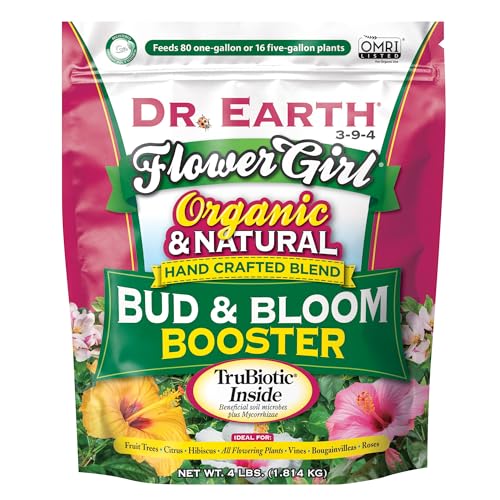
Dr. Earth Flower Girl blends natural and organic ingredients tailored for flowering plants, vines, citrus, hibiscus, bougainvillea, and roses. The product emphasizes a handcrafted, non-GMO formula without synthetic additives. This booster focuses on enhancing blooms and plant vitality through soil-friendly nutrients, appealing to gardeners who prefer a more natural approach for ornamental plants and container gardens. Regular applications during the growing season help sustain robust flowering cycles.
Buying Guide: Key Considerations for Flower-Focused Fertilizers
- NPK balance and release type: Flower-focused blends typically feature moderate nitrogen to avoid excessive leafy growth and a higher emphasis on phosphorus and potassium to boost blooms. Consider slow-release formulas for steady nutrition over weeks or months, especially for outdoor beds or containers with inconsistent watering.
- Organic certification and safety: OMRI-listed products provide assurance for organic gardening. If you grow edible ornamentals or prefer soil-building options, prioritize organic labels and natural ingredients such as bone meal, fish meal, seabird guano, and meal-based blends.
- Soil health and microbiology: Fertilizers with bio-tones or microbial components promote soil biodiversity, which can improve nutrient uptake and resilience. This is particularly beneficial in container gardening where soil life is limited.
- Plant type and growing environment: Annuals, perennials, roses, and flowering containers may have different nutrient needs. Choose products designed for flowering plants or all-purpose blends that explicitly support blooms for the types you grow.
- Application method and frequency: Some fertilizers are ready-to-use granules; others require mixing with water. Consider your routine, whether you prefer dry granules dug into the soil or liquid concentrates that are easier to apply through irrigation.
- Environmental considerations: Organic formulas generally have lower risk of leaching and runoff when applied as directed. In areas with heavy rainfall, mulch and proper watering practices help maximize nutrient retention and minimize waste.
- Container vs. garden bed use: Containers require more frequent feeding due to limited soil volume. Look for balanced blends with slightly slower nutrient release to avoid salt buildup in pots.
- Budget and coverage: Compare coverage rates per bag and expected bloom response. Some high-quality organic blends may have longer-lasting effects, reducing the need for frequent applications.
Choosing the right product involves matching the fertilizer’s nutrient profile and release mechanism to your flowering plants, soil type, and gardening routine. For best results, follow label directions, water adequately after feeding, and monitor plant response across several weeks to adjust future applications.