Optimizing your lawn’s health during fall requires choosing the right fertilizer ratio to encourage root growth, enhance nutrient absorption, and prepare grass for winter. Below is a summary table of top fertilizers with ideal NPK ratios for fall application, chosen to suit various grass types and nourishment needs.
| Product Name | Brand | NPK Ratio | Features |
|---|---|---|---|
| Scotts Turf Builder Lawn Food | Scotts | 16-4-8 | Promotes strong roots and water absorption; suitable for all grass types |
| Ultimate 3-18-18 NPK Liquid Fertilizer | Simple Lawn Solutions | 3-18-18 | High phosphorus and potassium for root vigor and turf hardiness |
| The Andersons Professional PGF Complete | The Andersons | 16-4-8 | Slow-release nitrogen and humic acid; enhances turf quality |
| Scotts Green Max Lawn Food | Scotts | 22-0-5 (approx.) | Dual-action fertilizer with iron supplement for faster greening |
| Superior 15-0-15 Liquid Lawn Fertilizer | Simple Lawn Solutions | 15-0-15 | Balanced nitrogen and potassium blend with natural additives |
Scotts Turf Builder Lawn Food for Strong Roots
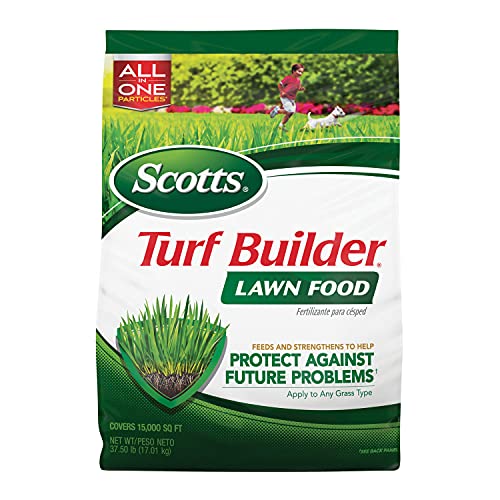
Scotts Turf Builder Lawn Food is designed to feed all grass types by strengthening roots and improving nutrient absorption. Its formula builds deep root systems, crucial for lawn resilience during colder fall months. Suitable for application on both wet and dry lawns, the fertilizer enhances the lawn’s ability to absorb water and nutrients compared to unfed lawns. Ideal for home lawns up to 15,000 sq. ft., this product supports lawn recovery after summer stress and prepares grass for winter dormancy.
Ultimate 3-18-18 Liquid Fertilizer for Root Vigor
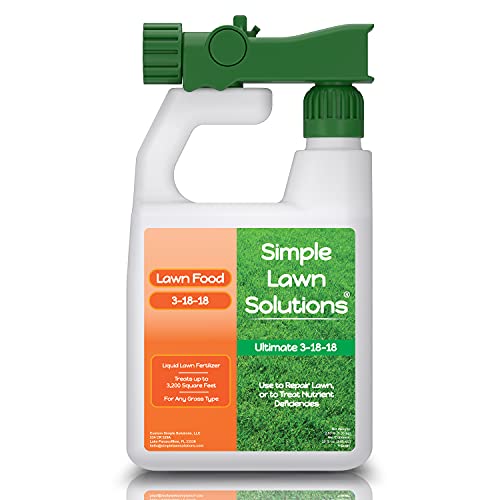
This liquid fertilizer by Simple Lawn Solutions boasts a high phosphorus and potassium formula of 3-18-18, which is essential for fall as it promotes root development and overall turf strength. Phosphorus supports energy transfer for growth, while potassium improves drought tolerance and disease resistance. The fertilizer is easy to apply via sprayer, suitable for any grass type, and designed to increase turf hardiness and vigor through fall and beyond. It is particularly beneficial for lawns showing nutrient deficiency signs.
The Andersons Professional PGF Complete 16-4-8 Fertilizer

The Andersons PGF Complete 16-4-8 offers a phosphorus-free blend enriched with humic acid, which supports soil biology and nutrient uptake. The slow-release nitrogen format allows steady feeding, reducing the risk of overgrowth or nutrient loss. Its fine particle size ensures uniform application for a lawn area up to 5,000 sq. ft., making it ideal for homeowners seeking consistent growth and extended fertilization. The inclusion of DG particles helps prevent premature nutrient release caused by mowing.
Scotts Green Max Lawn Food with Iron Boost

Scotts Green Max stands out as a dual-action fertilizer combining fertilizer with 5% iron to deliver rapid greening effects within three days. This formula is suited for spring, summer, and fall applications across all grass types. Iron plays a critical role in chlorophyll production, promoting vibrant color while feeding the lawn. The balanced nutrient profile supports lawn vitality during fall when grass slows growth, helping maintain a lush, green appearance.
Superior 15-0-15 Liquid Fertilizer for Balanced Growth

The Superior 15-0-15 liquid fertilizer provides a balanced nitrogen and potassium formulation blended with natural humic acid, fish, and seaweed extracts. This mix promotes green turf, strong growth, and increased turf resilience during seasonal transitions. Suitable for any grass type, including Bermuda, Kentucky Bluegrass, and Tall Fescue, it offers an all-season solution that supports fall lawn vigor and prepares turf for winter stress. The liquid format ensures quick nutrient uptake.
Buying Guide: Choosing The Best Lawn Fertilizer Ratio For Fall
Selecting the appropriate fertilizer ratio during fall depends on several factors that impact lawn health and winter preparation:
Lawn Grass Type
Cool-season grasses (e.g., Kentucky Bluegrass, Fescue) and warm-season grasses (e.g., Bermuda, Zoysia) have different nutrient needs. Cool-season grasses benefit more from fertilizers higher in phosphorus and potassium to encourage root growth. Warm-season grasses require balanced nitrogen and potassium, with less phosphorus.
Nutrient Ratio Considerations (N-P-K)
- Nitrogen (N): Supports leaf growth and color but should be reduced in late fall to avoid excessive top growth that can freeze damage roots.
- Phosphorus (P): Critical for strong root development, especially important in fall to prepare lawn for winter stress.
- Potassium (K): Enhances drought resistance, disease tolerance, and overall turf hardiness.
Slow-Release Vs. Quick-Release
Slow-release fertilizers provide nutrients over an extended period, supporting steady growth and reducing nutrient runoff. These are preferred in fall to avoid too rapid growth. Quick-release options may be used when rapid greening or repair is needed but with caution.
Application Methods and Timing
Fall fertilization is most effective when applied during early to mid-fall when grass roots are actively growing, but temperatures are cooler. Liquid fertilizers offer fast nutrient absorption, while granular slow-release products support longer-term feeding. Always apply according to the manufacturer’s instructions to avoid overfeeding.
Additional Nutrients
Iron supplements in fertilizer can improve lawn greening without excess nitrogen. Humic acids and natural additives like seaweed extracts boost soil health and nutrient uptake.
By balancing these considerations, you can select a fertilizer product with the optimal NPK ratio and formulation tailored for your lawn’s fall needs, ensuring turf strength and vibrant color through winter and into spring growth.