Best Fungicide for Palm Trees: Top Palm-Safe Options for Healthy Fronds
Palms can be susceptible to a range of fungal diseases that threaten their vigor and appearance. The right fungicide can help protect fronds, prevent spots, and keep palms thriving in home landscapes and gardens. This guide highlights five effective, user-friendly products that are well-suited for palm disease control, with practical notes on use, safety, and application considerations for American readers.
| Product | Brand | Type | Notes |
|---|---|---|---|
| Southern Ag Liquid Copper Fungicide (32 oz) | Southern Ag | Copper-based fungicide | Controls bacterial and fungal diseases; compatible with hose-end sprayers |
| Grower’s Ally Fungicide Spray (24 oz) | Grower’s Ally | Citrus/organic-friendly fungicide | Kills and prevents powdery mildew; OMRI-listed |
| Earth’s Ally Disease Control Concentrate (32 oz) | Earth’s Ally | Citrus acid-based fungicide | Targets powdery mildew, blight, black spot; natural formulation |
| Trifecta Crop Control (4 oz) | Trifecta | Natural pesticide and fungicide concentrate | Broad-spectrum protection; easy mixing for spray |
| Garden Safe Fungicide3 (32 oz) | Garden Safe | Neem oil-based organic fungicide | Organic gardening friendly; controls black spot, aphids, spider mites |
Choosing the right product for palm trees involves balancing disease type, safety for palms, and ease of use. The selections below emphasize practical, palm-friendly options that can help manage common palm ailments such as leaf spot, blight, and mildew, while offering guidance on safe application and performance expectations.
Southern Ag Liquid Copper Fungicide (32 oz)
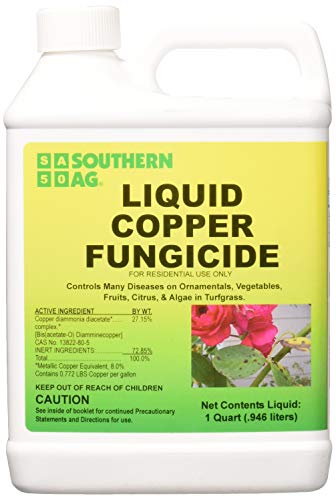
This copper-based fungicide provides broad protection against diseases caused by bacteria and fungi. The formulation is designed to work well with hose-end sprayers, making it convenient for treating larger palms or multiple trees. It is labeled for control of moss and algae, which can be a concern in humid climates. For palm care, copper products can help suppress leaf spots and fungal infections on fronds when applied according to label directions. As with all copper products, avoid excessive use on very young or stressed tissue to reduce potential phytotoxicity.
Key considerations include compatibility with spray equipment, coverage of the leaf canopy, and adherence to dilution rates. Copper products can provide quick knockdown of active infections and ongoing protection with repeat applications as recommended. This product is best used as part of an integrated disease management plan that includes proper irrigation practices and sanitation to reduce leaf wetness duration.
Grower’s Ally Fungicide Spray (24 oz)

Grower’s Ally Fungicide Spray emphasizes natural and organic-compatible protection. It is formulated with citric acid and is FIFRA 25(b) exempt, with OMRI listing for organic gardening. The spray targets powdery mildew and other common plant pathogens, forming a protective barrier on leaf surfaces when used preventatively. Its plant-friendly composition makes it suitable for ornamental palms and palms grown in edible landscapes, where residue concerns are important.
From a palm-care perspective, this product can serve as a preventive shield during humid seasons when powdery mildews tend to flourish. It is important to ensure even coverage on both the adaxial and abaxial leaf surfaces and to reapply according to the label for ongoing protection. Avoid applying during periods of active rainfall if not labeled for rainfastness, and observe any restrictions for fruiting or flowering stages if applicable to edible palms.
Earth’s Ally Disease Control Concentrate (32 oz)

Earth’s Ally Disease Control is a natural fungicide spray based on citric acid and designed to treat and prevent common plant diseases, including powdery mildew, downy mildew, blight, and other foliar issues. The product’s emphasis on a safer, residue-free formulation aligns with consumer demand for environmentally conscious options in residential landscapes. For palm trees, this can be a good option when disease pressure is moderate and the user seeks a plant-friendly treatment with minimal synthetic components.
Considerations include the timing of applications relative to environmental conditions, potential interactions with beneficial microbes, and the need for thorough coverage to keep fungal spores from establishing on fronds. While the products may be gentle, adherence to label directions remains essential to avoid any adverse effects on palm tissue. A proactive approach—combining cultural practices with preventive sprays—often yields the best long-term results.
Trifecta Crop Control (4 oz)

Trifecta Crop Control is a multi-action concentrate designed to tackle mildew, mites, and mold with a broad spectrum of activity. Its easy-to-use formula makes it convenient for treating palms that show signs of powdery mildew, botrytis, or other fungal issues. The product is marketed as safe for many crops, including trees, shrubs, and ornamentals, when used as directed. The concentrated nature means you can mix according to the label to achieve the desired spray strength for palm tissue.
For palm trees, Trifecta Crop Control can be a practical option when disease pressure is diverse, combining fungicidal action with mite and some insect-control capabilities. Always test on a small leaf area before broad application to confirm there is no phytotoxic reaction. Consider combining with a cultural regimen—proper pruning to improve airflow and water management—for best results across the canopy.
Garden Safe Fungicide3 (32 oz)

Garden Safe Fungicide3 combines neem oil extract with a broader fungicidal action to address black spot, aphids, and spider mites. Its organic gardening orientation makes it attractive for homeowners seeking a natural approach to palm disease management. The product’s Neem-based action can help suppress fungal development while also providing a degree of insect control, which is beneficial for palms facing multiple pest pressures.
In practical terms, Garden Safe Fungicide3 is well-suited for preventive applications on palms in residential settings. It is important to apply on a schedule that corresponds with palm growth cycles and to monitor for any adverse responses on sensitive fronds. This option can be part of an integrated pest management plan that balances disease control with pollinator-friendly practices and soil health considerations.
Buying Guide: Key Considerations For Palm Tree Fungicides
- Active ingredient and disease coverage — Different products target different pathogens (fungi, bacteria, powdery mildew, blight). For palms, look for broad-spectrum or disease-specific formulations that address leaf spot and mildew commonly seen on fronds.
- Palms and phytotoxicity — Some copper-based or concentrated formulas can affect young or stressed tissue. Test on a small area and follow label dilution to minimize leaf burn.
- Organic vs synthetic — Organic options (citric acid-based, neem, essential oils) appeal to eco-minded growers but may require more frequent applications or higher spray coverage to achieve the same level of control as conventional products.
- Spray coverage and method — Palms often have a broad canopy. Choose products that are compatible with hose-end sprayers or hand-sprays and ensure thorough coverage of both sides of fronds and lower leaf surfaces.
- Watering, humidity, and wind — Environment influences disease pressure. In humid climates, more frequent preventive applications may be necessary, while avoiding spray drift to non-target areas.
- Residue and harvest considerations — For landscapes with edible palms or fruit-bearing varieties, prefer products labeled as safe for edible crops or with minimal residues. Always follow label guidance on pre-harvest intervals if applicable.
- Integration with cultural practices — Fungicides are most effective when combined with proper pruning for airflow, adequate irrigation to avoid leaf wetness, and canopy cleaning to remove diseased fronds.
- Reuse and rotation — Avoid repeated use of a single active ingredient to reduce the risk of resistance. Rotate products with different modes of action as appropriate per label.
Selecting the right fungicide for palm trees depends on disease pressure, environmental conditions, and personal preferences regarding organic options. For many homeowners, a combination approach that includes preventive spraying, careful irrigation management, and regular pruning yields the best results for palms across a landscape.